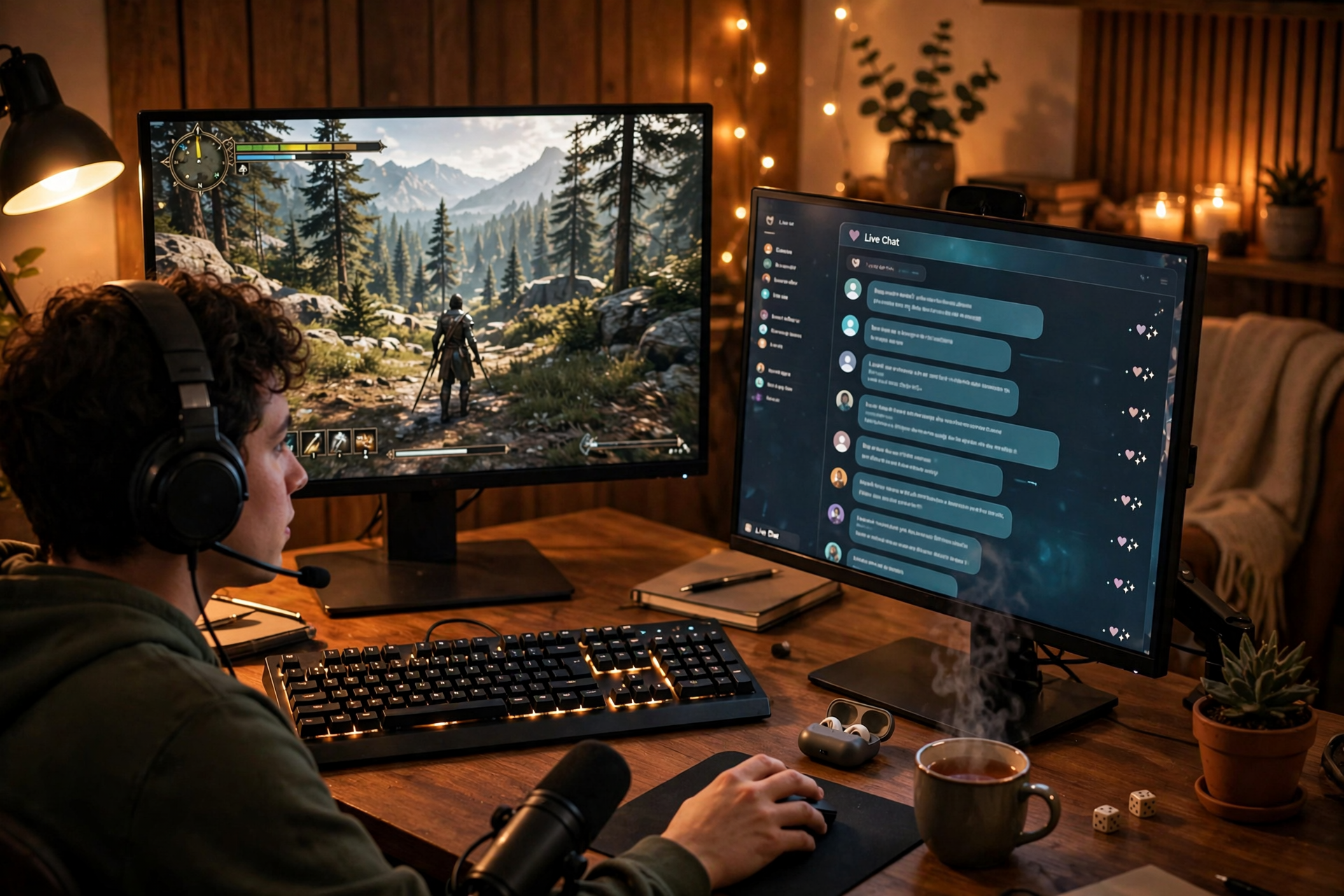
A lurker is not necessarily an uninterested viewer. They may be watching while working, listening from another tab, feeling shy, or deciding whether your channel deserves a place in their routine. The goal is not to force them into chat. It is to make the stream valuable enough that returning feels like the obvious next step.
Treat lurking as a valid viewing mode
Start by removing the assumption that quiet viewers need to be fixed. Many lurkers are evaluating your pacing, voice, atmosphere, and consistency before they decide whether to participate. If every silent viewer receives a direct question, repeated greeting, or request to speak, the stream can feel like an obligation instead of a place to relax.
Use language that welcomes people without putting them on the spot. A simple line such as “Whether you are chatting or just hanging out, glad you are here” sets the tone for everyone. Keep talking to the room rather than narrating every viewer count change, and let people become familiar with your style before asking them to identify themselves.
Give the stream a visible thread to follow
Quiet viewers are more likely to return when they can understand what is happening without constant chat participation. Before going live, define one clear thread for the session: finish a difficult challenge, test three strategies, review a community submission, or reach a specific milestone. Mention that thread during the opening and revisit it as the stream develops.
Break the main goal into visible checkpoints. A viewer who arrives halfway through should be able to tell what has been completed, what is next, and why the outcome matters. This creates a lightweight story for people who never type a message, while also giving returning viewers a familiar structure they can recognize from one broadcast to the next.
Use low-friction participation signals
Not every interaction needs to be a conversation. Offer actions that require little effort, such as choosing between two options, using a simple channel point reward, voting through a poll, or reacting with an emote. These signals let lurkers influence the broadcast without requiring them to introduce themselves or maintain a long exchange.
Place these prompts at natural decision points instead of repeating them every few minutes. Explain what the response changes, then acknowledge the result in the content. When a poll alters your route, loadout, review order, or challenge rules, viewers learn that participation has a visible effect and may be more willing to return for the next decision.
Create recognition without demanding disclosure
Regulars are built through familiarity, not just follower counts. Develop a few consistent phrases, segment names, visual cues, or recurring checkpoints that make your channel feel like a continuing series. A lurker may never speak, but they can still recognize the moment when the stream enters its main challenge or when you review the community’s progress.
When someone does participate, remember the useful context they chose to share, but do not turn that memory into a public performance. A relaxed “good to see you again” is often better than listing everything you know about a viewer. Keep recognition proportional to the relationship so occasional visitors can become familiar faces without feeling watched.
End with a specific return reason
Avoid closing with a vague promise to stream again soon. Give viewers a concrete reason to come back: the next attempt at the unfinished challenge, a scheduled review, the final stage of a series, or a community decision that will be resolved on the next broadcast. The reason should be understandable even to someone who never chatted during the current session.
Repeat the next-stream detail near the end and place it somewhere visible in your channel information or announcement routine. If your schedule changes often, describe the trigger instead of pretending the time is fixed: for example, “Next stream is when we test the winning build.” A clear continuation makes returning feel like following a story rather than remembering a date.
Measure return behavior instead of chat volume alone
Chat messages are useful, but they are a poor sole measure of lurker conversion. Compare returning viewers, average watch time, follows from viewers who stayed beyond the opening, and attendance on the next related stream. Review which segments held attention and whether people returned for the same format, category, or recurring challenge.
Run one retention experiment at a time for two or three weeks. You might test a stronger opening objective, a visible progress board, a next-stream teaser, or a low-effort poll. Keep the rest of the format stable, record the result after each broadcast, and retain the changes that improve repeat attendance without making the stream feel scripted or demanding.
Ready to run viewers, chatters, or followers from one dashboard?
View pricing