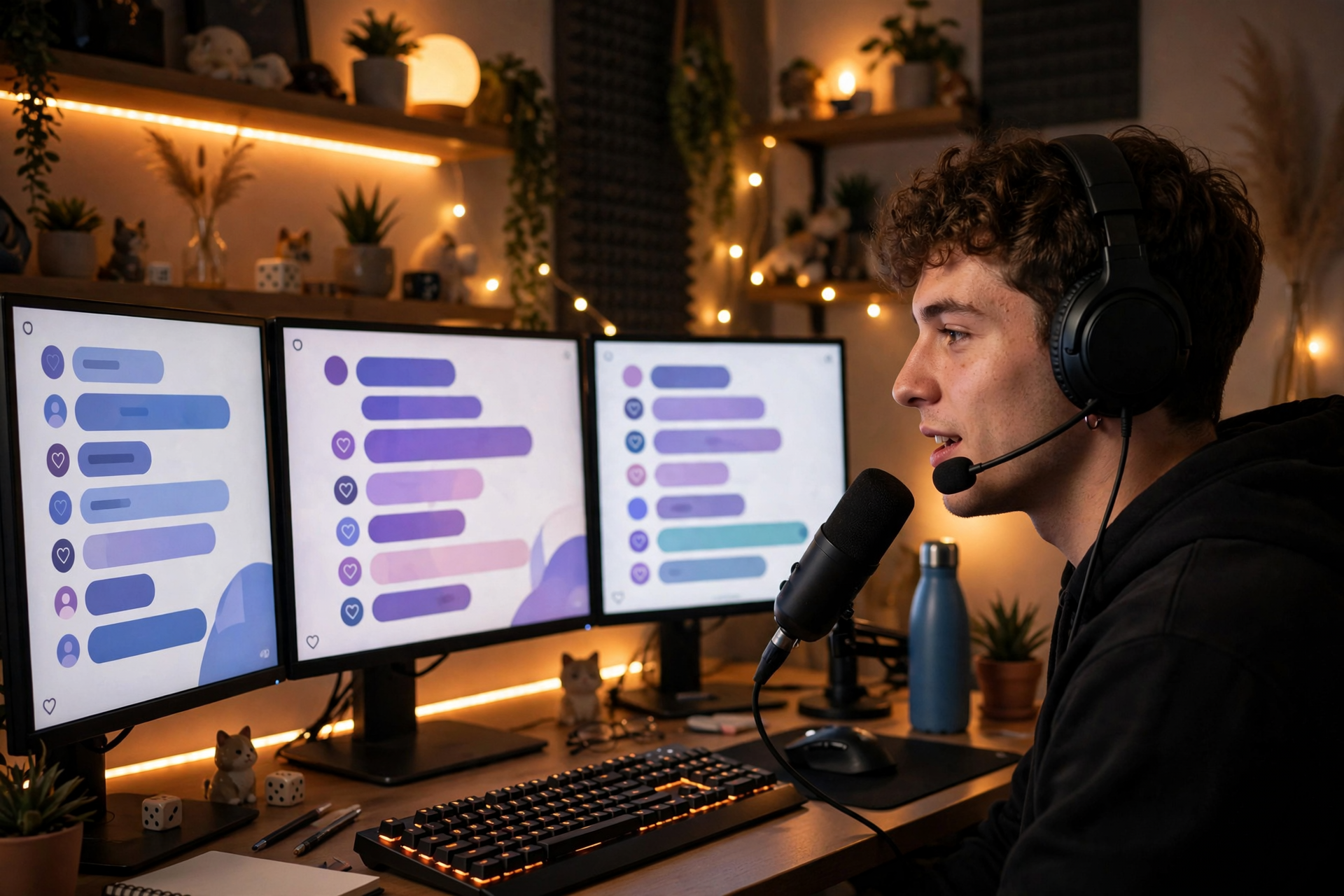
Lurkers are not failed viewers. Many are checking your personality, pacing, and community before deciding whether to speak, follow, or return. On Kick, the goal is not to force every quiet viewer into chat; it is to make staying feel comfortable and returning feel worthwhile. With a few deliberate habits, you can turn silent visits into familiar faces and eventually into active members of your community.
Make the First Few Minutes Easy to Understand
A lurker often decides whether to stay before they know anything about you. Start each stream with visible momentum: explain what you are doing, what the immediate goal is, and what viewers can expect next. Avoid opening with long stretches of setup, private conversations, or references to events that happened before they arrived. A simple introduction such as “We are testing this challenge today, then reviewing the results before the final match” gives a quiet viewer enough context to follow along.
Repeat essential context naturally throughout the stream instead of assuming everyone heard the opening. New viewers can arrive at any time, and a concise explanation helps them feel included without putting them on the spot. Keep your title, category, and opening activity aligned so the promise that earned the click is obvious within the first few minutes.
Welcome Without Calling People Out
Many viewers stay quiet because they do not want public attention. Avoid announcing every new viewer or asking a silent person why they are not chatting. Instead, make broad invitations that do not require an immediate response: “If you are just relaxing, welcome in,” or “You can vote with an emote if you do not feel like typing.” This signals that lurking is accepted while still showing that participation is available.
When someone does speak, respond to the substance of their message rather than treating their first comment like a major event. Ask one natural follow-up question, then return to the content so the conversation does not become an interview. A calm, proportionate response teaches new viewers that chat is friendly and that they can join without becoming the center of attention.
Create Low-Pressure Reasons to Participate
Replace vague prompts such as “How is everyone doing?” with questions that are quick and specific. Ask viewers to choose between two loadouts, predict the next result, rate a decision from one to five, or share a single recommendation. These prompts are easier to answer because they give people a clear starting point and connect directly to what is happening on stream.
Use several participation levels so viewers can engage at their own pace. A lurker might begin by watching a poll, then react with an emote, then type a short answer, and eventually start a conversation. Do not treat every response as a demand for more interaction. Thank people, use their input when appropriate, and let the stream continue even when chat goes quiet.
Give Your Stream Repeatable Segments
Regulars return when they can remember more than your username. Build one or two recurring moments that fit your content, such as a weekly challenge, viewer choice round, community review, end-of-stream recap, or first-match prediction. The segment should be simple enough to run consistently and distinctive enough that a viewer can say, “I want to catch that part next time.”
Keep the format stable while allowing the material to change. A recurring segment gives returning lurkers a reason to speak because they already understand the rules. Mention when it will happen during the stream, but avoid making the entire broadcast feel like a countdown to one feature. The main content should remain enjoyable even for someone who arrives at the wrong time.
Turn Familiarity Into Community Memory
When a quiet viewer returns and starts chatting, show that you remember useful, non-invasive details: a game they were trying, a strategy they recommended, or a result they were waiting for. A short follow-up such as “Did that build work out?” can make the viewer feel recognized without suggesting that you are monitoring their every visit. Keep personal boundaries clear and let viewers decide what they want to share.
Use lightweight community rituals that do not depend on constant conversation. You might recap an ongoing challenge, keep a public goal, or ask returning viewers to help choose the next topic. These shared reference points give people something to come back to and discuss. Avoid ranking viewers by loyalty or creating pressure to prove attendance, since that can make casual lurkers feel excluded.
Review What Makes People Stay and Return
After each stream, review more than peak viewers. Note when chat became more active, which segments produced questions, when people left, and whether the ending gave viewers a clear reason to return. Compare similar streams rather than drawing conclusions from one unusually busy night. Your goal is to find patterns in pacing, topics, and interaction—not to chase every fluctuation in audience size.
Use those observations to make one or two changes for the next broadcast. You might shorten the opening, move a community segment earlier, prepare better conversation prompts, or end with a specific preview of the next stream. Then repeat the format long enough to judge it fairly. Lurkers become regulars through accumulated positive visits: a clear welcome, a comfortable atmosphere, and a reliable reason to come back.
Ready to run viewers, chatters, or followers from one dashboard?
View pricing