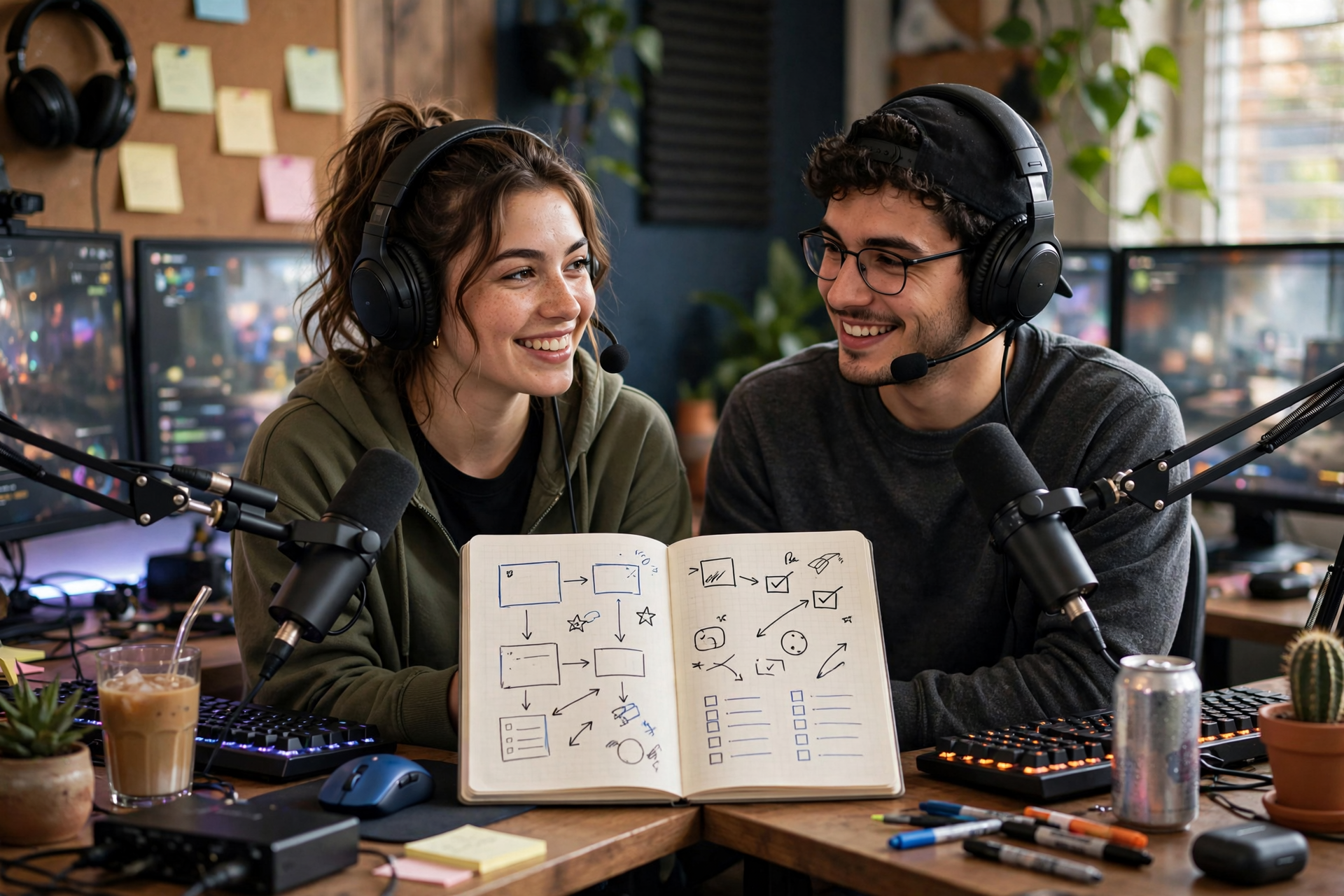
A collab or raid works best when both creators know what is happening before the stream begins. Instead of treating the event as a surprise burst of viewers, build a small operating system around it: choose a compatible partner, agree on the format, protect both communities, and review the result afterward. This makes each shared broadcast easier to run and easier to improve.
Choose the right kind of Kick partner
Start with audience behavior rather than follower count. A strong partner may stream a related game, serve a neighboring interest, or have a similar pace and sense of humor. Look for overlap in what viewers enjoy, but leave enough difference that the collaboration gives both communities something new to watch.
Create a short partner scorecard before reaching out. Rate potential collaborators on schedule compatibility, moderation standards, communication speed, content fit, and willingness to share attention. A smaller creator who is reliable and prepared can produce a better event than a much larger creator who treats the collab as an afterthought.
Design a collaboration people can understand
Give the broadcast one sentence that explains why both creators are live together. Examples include competing in a timed challenge, testing the same strategy, building something in stages, or comparing two approaches to a shared problem. A clear premise helps viewers understand the event even if they arrive halfway through.
Decide what each creator contributes before announcing anything. One person might host the rules, another might track progress, or both might alternate control of the main activity. Avoid vague plans such as “we will hang out and see what happens”; flexibility is useful, but a visible objective keeps the stream from becoming two unrelated broadcasts in the same call.
Use a simple pre-stream agreement
Put the important details in a shared message or document: date, start time, platform setup, game or category, voice channel, stream titles, planned length, raid destination, and who handles technical decisions. Include a backup plan for disconnects, delayed starts, or a game that becomes unavailable.
Discuss boundaries as part of the preparation, not after a problem occurs. Confirm whether either creator has topics, jokes, guests, music, or viewer interactions they do not want included. Also agree on how clips, screenshots, VOD segments, and promotional posts may be reused so neither creator has to negotiate ownership while live.
Prepare the raid as a handoff, not a button press
Choose the raid destination based on the event’s purpose. A raid can close a joint broadcast, move viewers to the next scheduled segment, or introduce both communities to a creator who fits the theme. Tell viewers what they are joining and why the destination makes sense; a destination with no connection can feel like an interruption.
Before going live, prepare one short raid message that includes the creator’s name, current activity, and a friendly phrase viewers can use if they want to participate. Keep it easy to copy and avoid demanding that everyone follow, subscribe, or speak. The goal is a respectful introduction that gives the receiving streamer useful context without turning the audience into a sales pitch.
Run the event with visible coordination
Use a lightweight control channel for the creators or moderators. It can carry timing cues, technical warnings, rule changes, and reminders that should not interrupt the on-air conversation. Assign one person to watch the clock and one person to monitor urgent chat or moderation issues when the event becomes busy.
Build in reset points every 15 to 20 minutes. Restate the objective, show the current score or progress, and explain the next decision. These resets help viewers who arrived late and prevent the collaboration from depending on private context that only the original participants understand.
Review the relationship after the stream
Do not judge the event only by its peak viewer count. Compare the planned start time with the actual start, note technical interruptions, review chat quality, and record which segment generated the most natural interaction. If a raid was part of the plan, document whether the handoff was clear and whether both creators felt comfortable with the destination.
Send a short follow-up within a day while the experience is still fresh. Thank the partner, share one specific moment that worked, mention one adjustment for next time, and propose a realistic next step only if the collaboration felt healthy. Keep a private record of reliable partners, successful formats, and unresolved issues so your next invitation is based on evidence rather than excitement.
Ready to run viewers, chatters, or followers from one dashboard?
View pricing