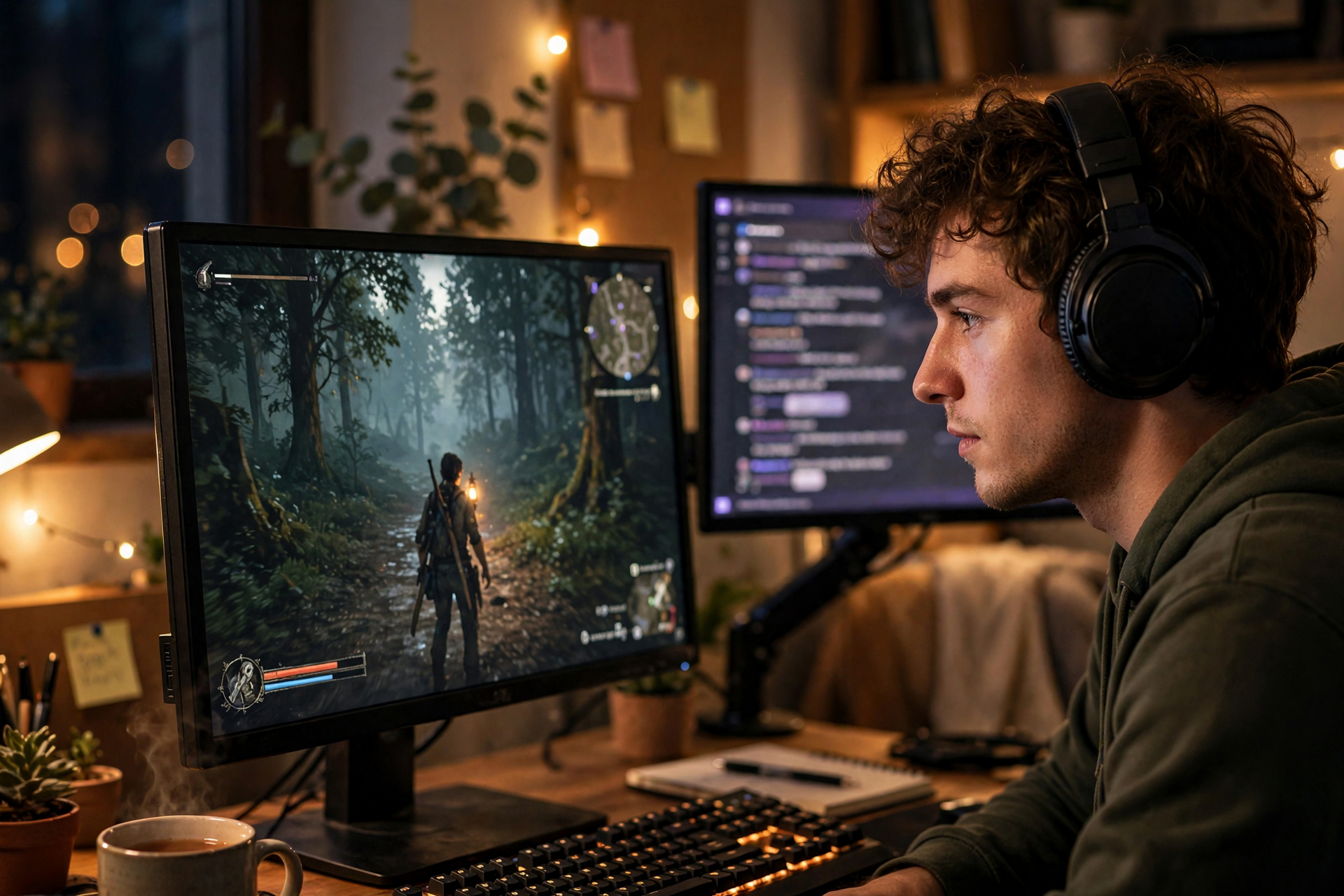
A lurker is not a failed chatter. They may be multitasking, learning your content, avoiding attention, or simply enjoying the stream in the background. The goal is not to force a message from every viewer; it is to make returning feel natural. When quiet viewers can understand what is happening, participate privately or passively, and recognize a consistent experience, some will gradually become familiar names.
Give Quiet Viewers Enough Context to Stay
Lurkers often leave when they cannot tell what the stream is about. If a viewer arrives during a long pause, an unexplained inside joke, or a confusing gameplay moment, they have to work too hard to catch up. Explain the current objective out loud every so often: what you are trying to complete, what decision is coming next, or why the current moment matters.
Use short verbal resets instead of repeating a formal welcome every few minutes. Phrases such as "I am testing this build before the tournament on Friday" or "We are working through the final chapter tonight" give a new viewer a useful entry point without interrupting the broadcast. Clear context lets someone watch silently while still feeling oriented.
Design Participation That Does Not Require Speaking
Many viewers want to influence the stream without becoming the center of attention. Offer choices that can be answered with a single word, emote, poll, channel point redemption, or prediction when those tools fit your content. A viewer who is not ready to introduce themselves may still vote on a loadout, choose between two challenges, or redeem a harmless visual effect.
Do not treat these tools as a nonstop engagement checklist. Give each interaction a clear purpose, allow enough time for people to notice it, and acknowledge the result whether one person responds or twenty do. Participation feels safer when the streamer values the outcome rather than using every prompt as a demand for chat activity.
Turn Viewer Patterns Into Useful Personalization
When a quiet viewer starts appearing regularly, notice their pattern before addressing them directly. They may arrive for a particular game, time slot, challenge, or segment. Build continuity around those patterns by keeping a recurring part of the show, mentioning progress since the last session, or making the next milestone easy to understand.
Personalization should never expose how closely you are monitoring someone. Avoid comments such as "You have been lurking for three hours" or calling attention to a viewer who has not spoken. Instead, make the content more recognizable for everyone: "This is our usual late-stream challenge" gives returning viewers a sense of belonging without putting any individual on the spot.
Create a Stream Structure That Rewards Repeat Visits
Regulars are formed by dependable experiences, not just memorable moments. Give your stream a loose sequence that viewers can learn: a quick setup, the main activity, a mid-stream objective, and a closing recap. The structure can remain flexible, but familiar landmarks help a returning lurker know when to arrive and what they are likely to see.
Add progress that carries from one broadcast to the next. This might be a ranked challenge, a build-in-progress, a community goal, or a weekly review of decisions made on stream. End by stating what changed and what comes next. If your timing is also becoming consistent, document it with a realistic Twitch streaming schedule that viewers can remember rather than a timetable you cannot maintain.
Use Conversation Hooks Instead of Generic Questions
Broad questions such as "How is everyone doing?" are easy to ignore because they require a personal answer with no obvious starting point. Replace them with specific, low-effort hooks connected to what is on screen: "Would you keep this item or sell it?" or "Is this route safer than the one we used yesterday?" A viewer can answer from observation instead of having to reveal anything about themselves.
Leave room after asking. Keep playing, explain your own choice, and let the question remain relevant for a while instead of repeating it immediately. If someone answers, build on the idea with a follow-up or test it in the content. When viewers see that responses change the conversation or the next decision, participation feels meaningful rather than decorative.
Measure Conversion Without Chasing Chat Volume
A healthy lurker-to-regular system is not measured only by messages per minute. Review returning viewers, repeat attendance across recent streams, average watch time, follows from returning visitors, and which segments coincide with people coming back. Compare similar broadcasts so one unusually large raid or category change does not distort your conclusions.
Run one small experiment at a time for two or three weeks. Try a clearer opening recap, a recurring mid-stream decision, or a stronger closing preview, then compare the results with your normal format. Keep the elements that improve repeat viewing without making the stream feel needy. Quiet viewers do not need to be converted on command; they need a broadcast that consistently makes another visit worthwhile.
Ready to run viewers, chatters, or followers from one dashboard?
View pricing