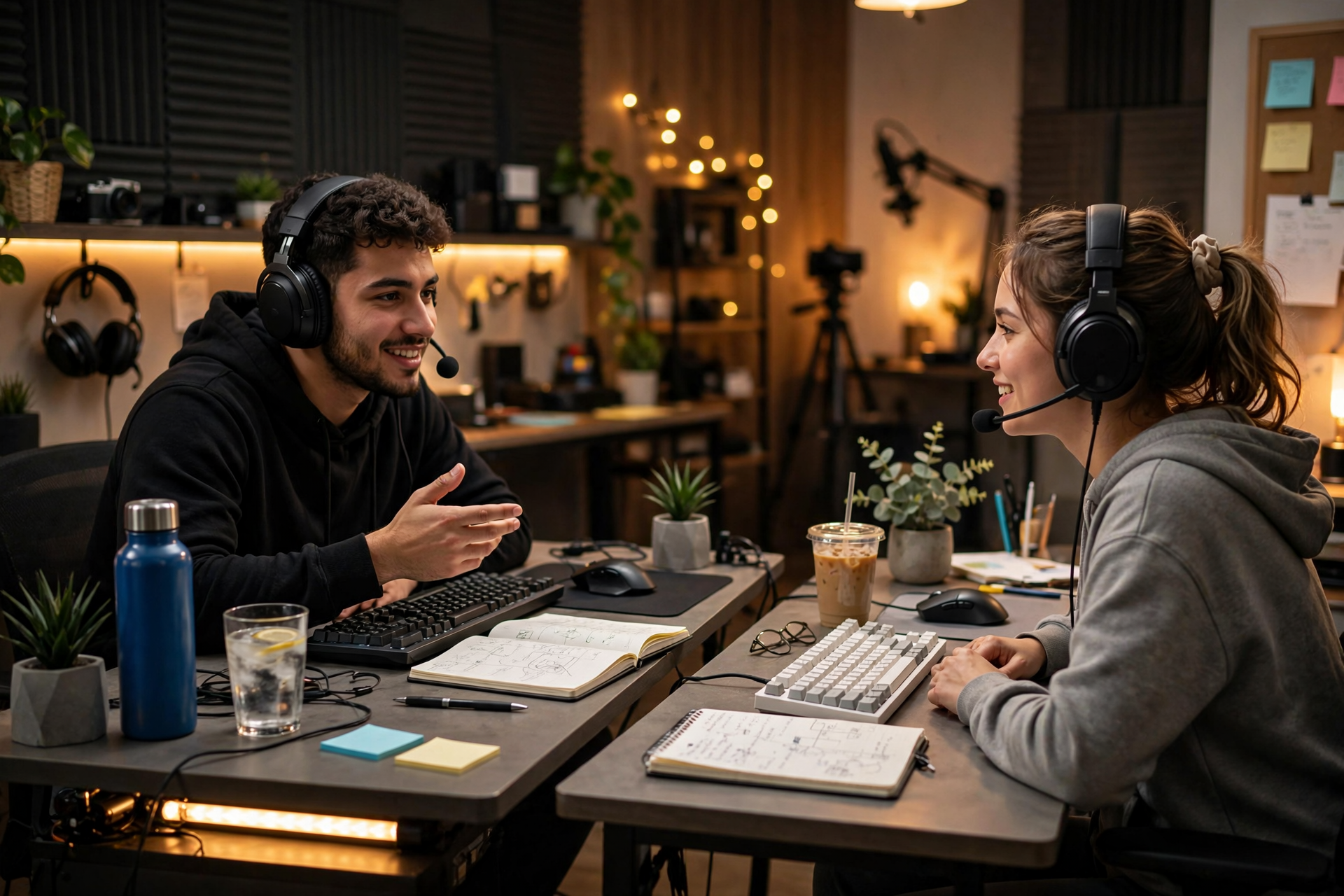
A Twitch collab should be more than two creators appearing in the same call, and a raid should be more than clicking a button at the end of a broadcast. The strongest shared events have a clear purpose, a format that gives both communities something to do, and enough preparation to prevent awkward handoffs.
Choose a partner by audience fit, not follower count
Start with compatibility. Look for creators whose viewers enjoy a similar pace, humor level, language, and content category, even if their channel is smaller or larger than yours. A partner with a closely matched audience usually creates better conversation than a much bigger channel whose viewers have no reason to care about your format.
Before proposing anything, watch enough of their recent streams to understand how they handle chat, spoilers, sensitive topics, sponsored content, and moderation. Check whether your communities are likely to feel comfortable together. A good match protects both creators from having to force chemistry on camera.
Pitch one specific event instead of a vague collab
Make the invitation easy to answer. Include the date range, estimated duration, game or activity, number of participants, voice platform, and the result you want viewers to experience. For example, propose a two-hour challenge where each creator coaches the other through an unfamiliar game, rather than simply asking whether they want to stream together.
Offer a simple fallback plan in the same message. Decide what happens if one person disconnects, a game lobby fails, or someone needs to leave early. Clear logistics make a collaboration feel professional without making it feel corporate, and they reduce the chance that technical problems become the main story.
Design a format that gives both channels a role
A shared broadcast works best when neither creator becomes background noise. Use alternating rounds, team objectives, audience voting, timed challenges, interviews with prepared prompts, or a clear host-and-guest structure. Build in moments where each streamer can explain what is happening to their own viewers without talking over the other person.
Agree on the audience experience before going live. Decide whether both creators will stream their own perspective, how you will handle overlapping alerts, and which channel owns the main instructions. If viewers must constantly ask where to look or what the rules are, the event will feel disorganized even when the creators get along.
Prepare the raid before the final minute
Choose a raid destination based on current fit and readiness, not only on friendship or channel size. Confirm that the target is live, active enough to welcome visitors, and comfortable receiving your community. If the target has a mature-content policy, language preference, or chat rule that differs from yours, tell your viewers before the handoff.
Create a short raid message that gives useful context without demanding attention. Include your channel name, what you were doing, and one specific reason the target is worth watching. Ask your community to greet the streamer naturally, then let the target continue their show instead of expecting them to recreate your stream for a sudden crowd.
Make the handoff feel like a transition, not an interruption
During the last few minutes of your stream, explain what viewers are about to see and set expectations for the change in pace. If the target is in the middle of a match, conversation, or story, tell your audience that they may need to wait for a natural pause. This small amount of context lowers confusion and makes the raid feel considerate.
After the raid lands, stay briefly if the target welcomes it, but avoid dominating their chat or repeatedly directing attention back to yourself. Thank the host, introduce yourself once, and let your viewers decide whether the new stream suits them. A respectful exit often creates a better long-term relationship than trying to hold the room after the handoff.
Review the event like a shared production
Within a day, compare notes with the other creator. Discuss peak moments, technical friction, chat participation, average watch behavior, and whether the format gave both communities enough value. Do not judge the event only by immediate follows or viewer totals; a smaller but engaged audience may be a stronger result than a large wave that leaves instantly.
Save the useful parts for the next collaboration: the best prompts, successful game modes, timestamps, moderation decisions, and questions viewers asked repeatedly. Then propose a specific improvement or a possible sequel. Recurring events become easier to promote when viewers recognize the format and know what makes the next edition different.
Ready to run viewers, chatters, or followers from one dashboard?
View pricing