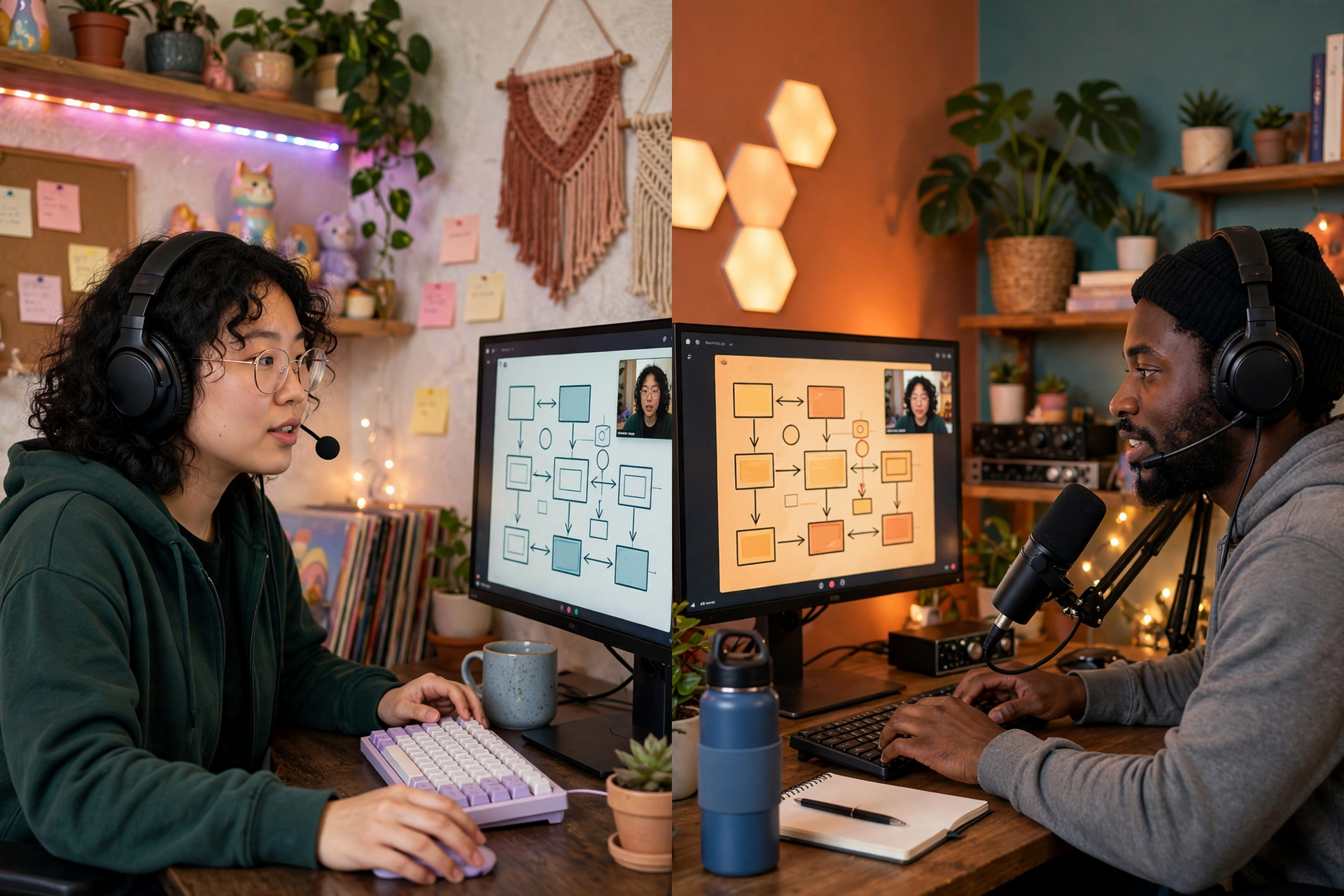
A good Twitch collab is more than two streamers appearing in the same call, and a good raid is more than pressing a button when your broadcast ends. The strongest partnerships give viewers a clear reason to watch both channels, make participation feel natural, and leave each creator with a useful next step. Build the relationship around shared programming rather than borrowed attention, and your collaborations become easier to repeat.
Choose a collaborator by audience fit, not follower count
Start by looking for overlap in viewer expectations. A creator does not need to make identical content, but their audience should plausibly enjoy your format, humor, pace, or game category. A strategy-game streamer might pair well with a challenge-focused creator, while two completely different formats may need a stronger shared premise before a collab makes sense.
Review a potential partner’s recent broadcasts before sending a message. Notice how they handle chat, whether their community is comfortable with guests, and how closely their public schedule matches yours. A smaller creator with dependable communication and a compatible audience is often a better partner than a large channel whose viewers have little reason to stay for your part of the event.
Pitch a specific event instead of asking to collab
Make your first message easy to answer. Include the proposed activity, approximate duration, possible dates, what each creator would do, and why the idea suits both communities. “Want to collab sometime?” creates work for the other streamer; “Would you be interested in a two-hour blind challenge on Thursday, with one of us coaching each round?” gives them something concrete to approve, adjust, or decline.
Offer two or three concepts that can be scaled to your available time. A low-prep option might be a joint review or co-op session, while a larger event could include team challenges, audience voting, or a progression goal. Avoid building the entire production around a feature you have not tested. The more complicated the event, the more important it is to run a short technical rehearsal first.
Give the collab a shared objective viewers can understand
The best joint streams have a simple question or mission at the center: can both creators complete the challenge, which team will finish first, or what happens when two different approaches meet? This shared objective keeps the broadcast moving and gives viewers a reason to watch the interaction instead of treating one streamer as a temporary guest.
Assign responsibilities before going live. Decide who introduces the premise, who watches the clock, how disagreements are handled, and who explains the next segment. If the event includes audience participation, agree on how questions, polls, or suggestions will be selected. Clear ownership prevents dead air and stops both creators from talking over the same moment.
Prepare a raid handoff that sounds like a recommendation
A raid works best when you introduce the destination before sending viewers there. Explain what the other streamer is doing, why your audience may enjoy it, and what your community should say when they arrive. A short, specific message feels more genuine than repeating a generic command with no context.
Coordinate the handoff privately when possible. Tell the receiving streamer roughly when you expect to end, share the raid message, and explain any inside joke or safety concern they should know about. If the destination is changing categories or starting a special segment, mention that on your stream so viewers arrive with useful context rather than confusion.
Protect both communities during the shared event
Before the collab, agree on boundaries around jokes, sensitive subjects, sponsorships, music, and audience interaction. Each streamer remains responsible for their own channel, so moderators should know the plan and have a direct way to flag problems. If a guest is new to your community, explain your chat norms without assuming they already know your rules.
Keep the experience welcoming for people who arrive late or do not know either creator. Repeat the premise at natural transition points, identify who is speaking, and avoid relying on private history for every joke. Viewers should be able to understand the activity within a minute or two, even if they missed the opening.
Review the partnership before planning the next one
Judge the event by more than peak viewers. Compare average watch time, chat participation, follows that remain after the broadcast, returning names, technical issues, and how much preparation the event required. Also ask whether both creators enjoyed the format. A smaller event that felt easy to repeat may be more valuable than a large spike that exhausted everyone involved.
Send a short follow-up within a day. Thank your partner, share one moment that worked, mention one change for next time, and suggest a specific next step if the response was positive. You can also point viewers toward the other creator in your recap or community update, provided the recommendation is relevant and follows each platform’s current disclosure and moderation expectations. Consistent follow-up turns a successful raid or collab into an actual creator relationship.
Ready to run viewers, chatters, or followers from one dashboard?
View pricing